The AI Revolution in Textile Design
Artificial intelligence has moved from a novelty to an essential tool in textile design studios worldwide. In 2026, AI isn't replacing designers — it's amplifying their creativity, eliminating tedious repetitive tasks, and opening new possibilities that were previously unimaginable. Here are the seven most significant AI trends reshaping the textile industry this year.
1. Generative Pattern Design
Text-to-pattern AI models have matured significantly. Designers can now describe a pattern in natural language — "Art Deco geometric with gold and navy, suitable for upholstery" — and receive multiple design variations in seconds. These models understand textile-specific concepts like repeat structures, color palettes appropriate for fabric, and even print method constraints.
The key advancement in 2026 is style consistency. Earlier models produced one-off designs; current systems can generate entire collections that share a cohesive visual language, maintaining consistent color palettes, motif scales, and design density across dozens of variations.
2. Intelligent Color Matching and Forecasting
AI color matching tools now achieve Delta E values below 1.0 when matching to Pantone TCX standards — a level of accuracy previously only possible through physical lab testing. But the bigger trend is predictive color forecasting. AI models trained on fashion runway data, social media trends, and retail sales data can predict which color palettes will trend 6-12 months ahead.
For textile designers, this means you can align your collections with upcoming color trends before traditional forecasting agencies publish their reports. Early adopters of AI color forecasting are reporting 20-30% faster sell-through rates on their seasonal collections.
3. Automated Quality Control
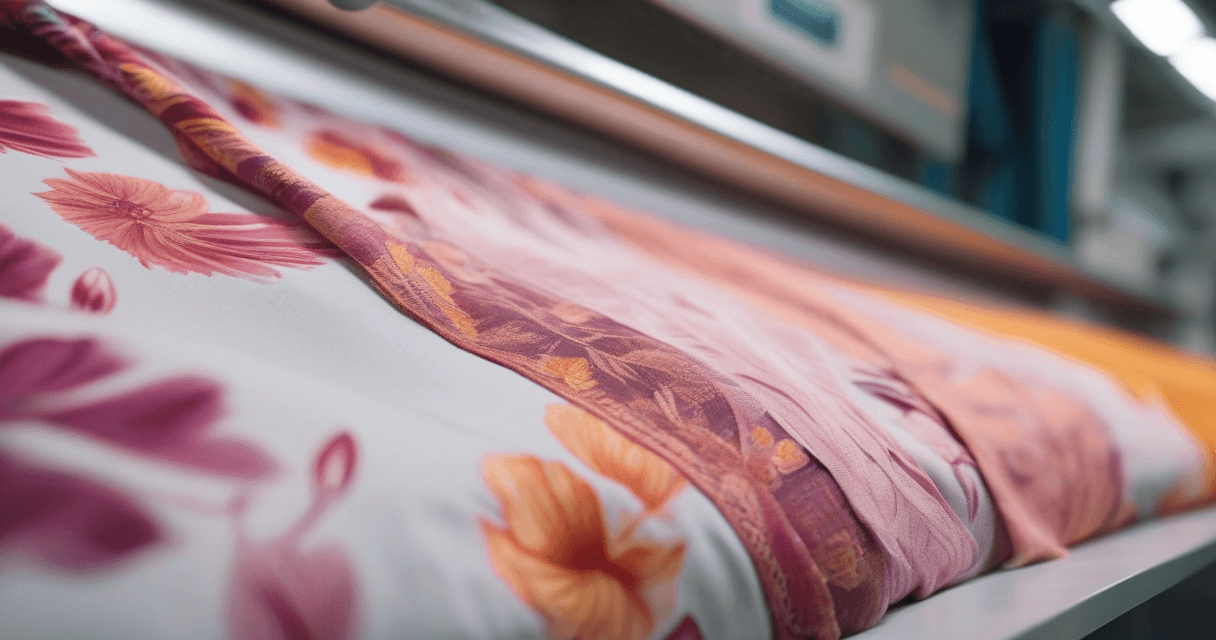
Computer vision systems deployed on production lines can now detect fabric defects in real-time at line speeds exceeding 100 meters per minute. These systems catch issues that human inspectors often miss: subtle color variations, pattern misalignment, and weave defects as small as 0.5mm.
The 2026 advancement is predictive defect prevention. By analyzing patterns in defect data, AI systems can predict when a printing cylinder is wearing out or when ink viscosity is drifting, triggering maintenance before defects occur rather than catching them after.
4. Sustainable Design Optimization
Sustainability is no longer optional in textile production. AI tools now optimize designs for minimal waste during the printing and cutting process. Color reduction algorithms help minimize the number of ink components and screens used, reducing chemical waste without visibly affecting the design quality.
New AI-powered tools analyze fabric yield — calculating how to lay out pattern pieces to maximize the usable fabric from each roll. Studios using these tools report 8-15% reduction in fabric waste, which translates directly to both cost savings and environmental impact.
5. Real-Time Style Transfer
Style transfer — applying the visual characteristics of one image to another — has become incredibly refined for textiles. Designers can now take any photograph, painting, or sketch and transform it into a specific textile technique: Batik, Ikat, Shibori, Block Print, or Watercolor effects.
The 2026 breakthrough is technique-aware transfer. Instead of just applying surface-level visual effects, AI models now understand the structural characteristics of textile techniques. A Batik transfer properly simulates wax-resist cracking patterns, while an Ikat transfer mimics the characteristic bleed at yarn boundaries.
6. AI-Powered Upscaling for Print
Resolution requirements for textile printing are demanding — 150-300 DPI at actual print size. Many design concepts start as small sketches, low-resolution mood board images, or AI-generated outputs at limited resolution. AI upscaling tools specifically trained on textile patterns can enlarge images by 4-8x while preserving — and even enhancing — fine details.
Unlike generic upscaling tools, textile-specific models understand pattern structures. They maintain the crispness of geometric edges, preserve the organic irregularity of hand-drawn elements, and avoid hallucinating new details that could disrupt the repeat structure.
7. Collaborative AI Workflows
The most significant trend of 2026 is the emergence of end-to-end AI workflows. Instead of using disconnected tools for different tasks, designers now work in integrated platforms where AI assists at every stage: concept generation, pattern engineering, color specification, production preparation, and quality assurance.
These workflows maintain design intent throughout the process. When you adjust a color at the concept stage, the system automatically updates the Pantone specification, recalculates the screen separation, and generates updated production files. This continuity eliminates the errors that traditionally occurred when designs moved between disconnected tools and teams.
What This Means for Textile Designers
AI in textile design isn't about automation replacing creativity — it's about removing technical barriers so designers can focus on what they do best: creating beautiful, meaningful designs. The studios thriving in 2026 are those that have integrated AI as a creative partner, using it to explore more ideas faster, make more informed decisions, and deliver production-ready files with fewer revisions.
The tools are accessible, the learning curve is minimal, and the productivity gains are substantial. Whether you're a solo designer or part of a large mill's design team, AI-powered textile design tools have become as essential as the design software itself.